
Discover David’s Solution
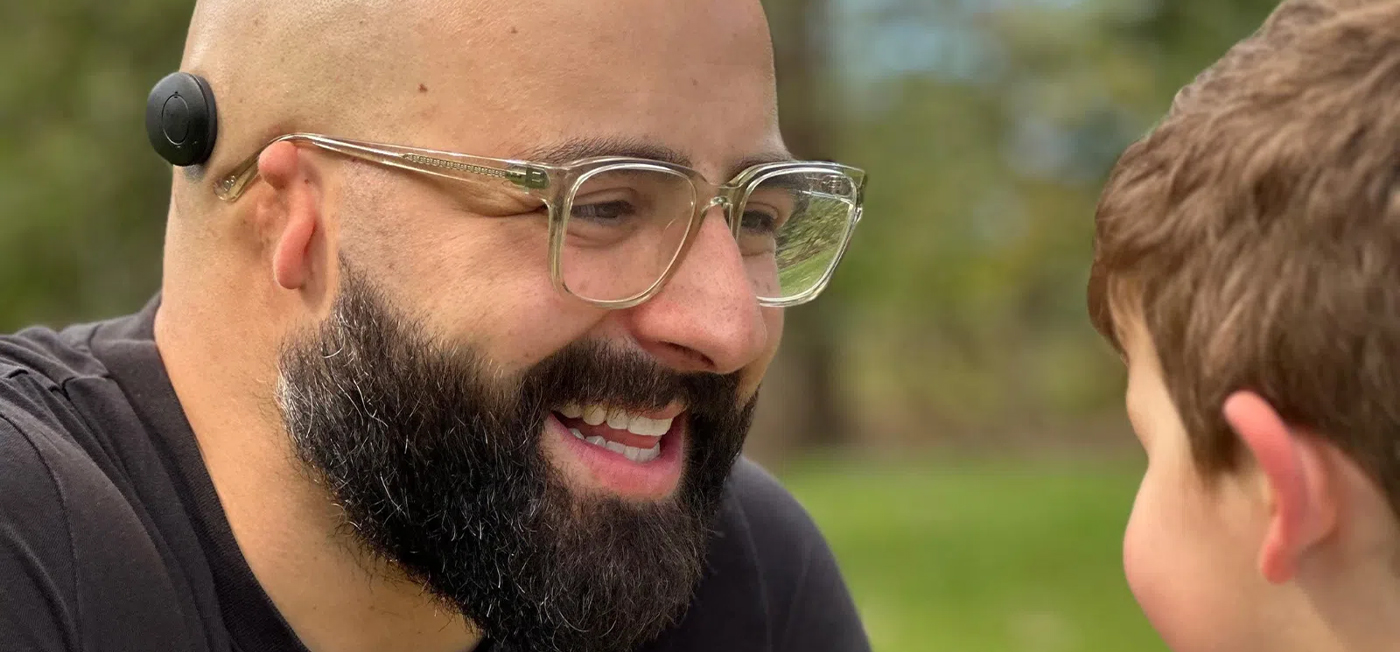
Meet David, a 33-year-old from Australia who was born with unilateral microtia and has found a hearing solution for his single-sided hearing loss. Today, David can enjoy stereo sound in conversations and everyday life. Find out here what solution he recommends for hearing loss due to unilateral microtia.
About David
My name is David. I’m 33 years old, live in Australia, and work in software. In my spare time, I enjoy cooking with produce grown on my farm, competing in wood-chopping competitions, working on miniature ride-on cars with my son, and going on adventures with my wife.
Hearing Loss Due to Unilateral Microtia
David was born with unilateral microtia on his right side and had never experienced stereo sound. Microtia means that there is no outer ear or ear canal for sound to enter the fully formed inner ear. Although the hearing loss itself was never a surprise, understanding its full impact came later in life.
Microtia is a congenital condition where the outer ear (pinna) is underdeveloped or missing, often affecting one or both ears. It can range from a slightly small ear to a complete absence of external ear structures. Because the ear canal may also be narrow or closed (atresia), microtia can significantly impair hearing by preventing sound from properly reaching the inner ear, leading to conductive hearing loss on the affected side.
A turning point came during a hearing test that David’s wife observed from behind a booth window. While David believed he was performing well, he noticed her reaction change each time he misunderstood a word.
With approximately 97% hearing in his left ear and only 3% hearing in his right ear, David learned to adapt over the years. He strategically chose where to sit in conversations, relied on lip reading, and received support from his wife and twin brother.
Discovering the Right Device for Hearing Loss
David
BONEBRIDGE user from AustraliaI’m in the rare position where I’ve had the opportunity to try both competing products on the market for my type of hearing loss. First, I tried out an Osia implant, however the auditory experiences with it was less than satisfying. I leveraged my knowledge around sound reproduction and audio engineering—and found out about MED-EL’s BONEBRIDGE bone conduction implant. I trusted that this technology in combination with the SAMBA 2 audio processor would provide a superior sound profile.
And from the moment my SAMBA 2 was activated, I knew that I made the right choice.

The Benefits of BONEBRIDGE and SAMBA 2
David highlights several benefits of his hearing solution.
- Natural Sound Quality
For David, the standout feature of BONEBRIDGE and SAMBA 2 is the sound profile. Compared to his previous audio processor, the sound is warmer, richer, and much closer to natural hearing. It also blends better with his normal-hearing ear, making listening less mentally exhausting.
- Comfortable Design
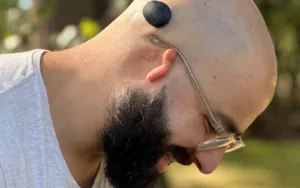
David appreciates the slim design of the SAMBA 2 processor, which fits comfortably into his daily life.
- Long Battery Life
Another feature he values is the impressive battery life of the audio processor.
- SAMBA 2 GO
David regularly uses the SAMBA 2 GO accessory, especially for podcasts and audiobooks.
- Improved Communication and Confidence
The greatest benefits for David have been smoother conversations and less strain on personal relationships. His hearing device supports him in both one-on-one and small group conversations and has given him greater confidence, particularly while lecturing and teaching at university.
My Advice for Others With Hearing Loss
David
Don’t wait to explore what’s available to you now. I wish I had started my implant journey earlier. Granted, I was waiting for the technology to improve before trying it—but at this point, now is a great time!
And if you already have a hearing implant, share your feedback with your local teams and device manufacturers. That’s how we all get better solutions.
Source: MED-EL Blog, Hearing Loss Due to Unilateral Microtia: Discover David’s Solution, published May 28, 2025.

 English
 Albanian
 Bosnian
 Bulgarian
 Croatian
 Czech
Czech Estonian
 Hungarian
 Latvian
 Lithuanian
 Macedonian
 Persian
 Romanian
 Serbian
 Slovak
 Slovenian